Northrop Grumman Achieves First Flight of Internally Developed Autonomous Drone
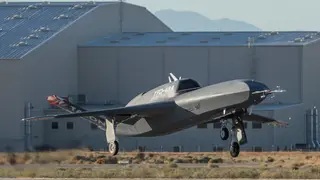
Northrop Grumman's Talon Blue drone, designated YFQ-48A by the Air Force, successfully completed its inaugural autonomous flight over the Mojave Desert in California, executing taxi, takeoff, in-flight maneuvers, and landing without external control. The company developed the drone internally after losing previous Air Force competition rounds for collaborative combat aircraft, though government interest remains and the Air Force has formally designated the platform. Northrop is complementing hardware development with software advancement through its Prism autonomy suite, which it is testing on other drone platforms.
Northrop Grumman pursued independent development of the Talon Blue after being excluded from the Air Force's initial rounds of competitive selections for autonomous drone wingmen. The service awarded contracts to rival firms Anduril and General Atomics for hardware development, while a separate software competition brought in Anduril, Shield AI, and Collins Aerospace. Despite these setbacks, the Air Force formally designated Northrop's platform with a military designation, signaling continued institutional interest in the company's approach.
Beyond the hardware demonstrator, Northrop is building complementary autonomous software capabilities through its Prism suite. The company has been validating this software architecture on existing drone platforms manufactured by its Scaled Composites subsidiary, establishing a dual-track strategy combining vehicle development with algorithmic advancement.
Northrop's autonomous flight milestone may influence ongoing Pentagon decisions about drone wingman procurement strategies and autonomy standards. The successful demonstration could strengthen the company's competitive position in future contract competitions, potentially affecting which defense contractors receive funding for next-generation aircraft systems. Additionally, the advancement of practical autonomous flight capabilities by multiple competing firms raises questions about how rapidly military aviation doctrine may need to evolve to incorporate these systems operationally.