Seattle Startup Orbital Robotics to Test Autonomous Robotic Arms on ISS for Satellite Servicing
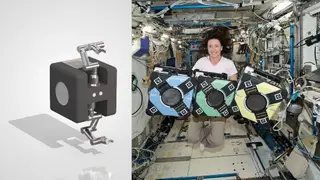
Seattle-based Orbital Robotics plans to launch its AI-controlled robotic arms to the International Space Station in late 2027 for a groundbreaking demonstration of satellite capture and servicing capabilities in microgravity. The company, founded in 2024 by Blue Origin veterans, will equip NASA's Astrobee free-flying robots with its arms to conduct three separate in-orbit tests designed to validate autonomous manipulation and upgrade technology. Success in these demonstrations could open new possibilities for sustainable orbital operations and satellite maintenance missions.
Orbital Robotics, established in 2024 by former Blue Origin employees, is preparing to validate its AI-driven robotic manipulation technology in the unique environment of low Earth orbit. The company's scaled-down arms will be integrated onto NASA's Astrobee free-flying robots—small cube-shaped platforms already operational aboard the station—to conduct three separate test phases beginning in late 2027. Each demonstration will be spaced approximately one month apart to allow thorough evaluation between missions.
The testing protocol involves one equipped Astrobee capturing a second Astrobee already in orbit, then performing a simulated upgrade by replacing a computational module. This approach builds upon earlier tentacle-arm experiments conducted in 2024. Arkisys, NASA's designated sustaining partner for the Astrobee program, will provide critical integration support and infrastructure, with Orbital Robotics self-funding the launch and demonstration costs through a Space Act Agreement arrangement.
Success in these demonstrations could accelerate the emerging in-space servicing and assembly sector by proving that autonomous robotic systems can reliably perform maintenance and upgrade tasks in microgravity. This may extend satellite operational lifespans, reduce orbital debris from decommissioned equipment, and lower costs for satellite operators. The technology could influence how space infrastructure is managed long-term, potentially benefiting commercial space ventures and government agencies alike. However, the practical viability of widespread orbital servicing depends on scaling these prototypes and addressing regulatory frameworks for autonomous operations in shared space environments.