Samsung Launches Screen-Free Smart Glasses as Industry Trends Away from Display Technology
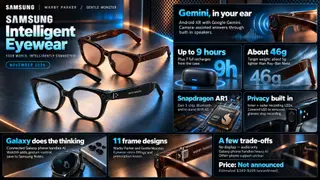
Samsung plans to release its inaugural smart glasses product in November featuring no integrated screen, a design choice that aligns with current market trends rather than bucking them. Nearly 96 percent of AI-powered glasses shipped in 2026 lack screens, indicating the technology industry has largely abandoned the approach pursued by Meta and other competitors. Samsung will compete in the no-screen category against Meta's more expensive display-based offerings.
Samsung's entry into the smart glasses market represents a significant shift in product strategy across the industry. The company's decision to omit integrated displays from its November launch reflects broader manufacturing and consumer preferences that have emerged over the past year. Market data shows that the overwhelming majority of AI-enabled eyewear products now prioritize alternative interaction methods over visual screen technology, suggesting companies have pivoted away from earlier design philosophies.
This positioning places Samsung in competition with numerous screen-free competitors while distinguishing its approach from Meta's continued investment in display-integrated models. The divergence highlights how different manufacturers are making distinct bets on which features will ultimately dominate the emerging smart glasses category.
Samsung's strategy could influence how consumers interact with wearable technology and may reshape expectations around augmented reality experiences. If screen-free glasses gain wider adoption, this could affect demand for smaller display components and alter how developers create applications for wearable platforms. The competitive split between display and non-display approaches may determine which design philosophy proves more practical for everyday use, potentially impacting the broader wearables industry's development trajectory and consumer spending patterns across multiple technology segments.