Berlin Designers Unveil Animal-Inspired Wooden Furniture Series in London
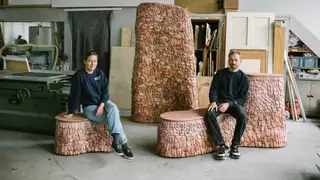
Berlin-based designers Lukas Wegwerth and Corinna Dehn are presenting their first UK exhibition at London's Gallery Fumi, featuring six new pieces from their 'Armadillo' furniture series that blend sculptural forms with architectural inspiration. Each piece is clad in wooden shingles inspired by animal textures and vernacular German architecture, with locally-sourced and often recycled materials processed through the designers' own sawmill and finished with natural pigments and traditional oils. The exhibition, running until November 28, 2026, demonstrates the designers' collaborative approach to pushing each other toward surprising aesthetic results.
The designers' long-standing relationship with Gallery Fumi spans over a decade, beginning with their acclaimed Crystallizations series that featured broken ceramics repaired through crystal growth. This London-based gallery specializes in artists who merge time-honored craft techniques with contemporary innovation, making it a natural home for Wegwerth and Dehn's practice. The pair's approach involves close collaboration with other creative practitioners, including Athens-based Voukenas Petrides and ceramicist Johannes Nagel, demonstrating how their work exists within a broader community of material-focused designers.
The Armadillo series itself emerged organically from practical necessity; the designers initially developed their signature shingled cladding technique using reclaimed materials from their own barn renovation in Germany. This resourceful beginning has evolved into a refined methodology centered on sourcing local and recycled wood processed through their private sawmill, then finished with natural pigments and traditional oils, creating pieces that balance sculptural ambition with sustainable material practices.
The exhibition may influence emerging conversations around sustainable luxury furniture design, potentially encouraging consumers to consider the provenance and processing methods behind bespoke pieces. By showcasing work that repurposes local materials and employs traditional techniques, the designers could impact how collectors and interior professionals evaluate environmental responsibility in high-end design. The visibility of such practice at established venues like Gallery Fumi may broaden appreciation for craft-intensive approaches, though accessibility through price point could limit wider societal adoption.