Lake Powell's Metallic Glow Reveals Geological Wonders Through Sunglint Effect
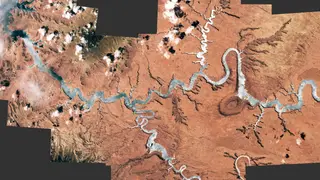
A 2016 astronaut photograph captures Lake Powell, the second-largest reservoir in the United States, appearing as a shimmering metallic serpent due to a sunglint phenomenon that reflects sunlight off its surface. The image highlights hidden geological features normally obscured by the water, offering a unique perspective from space. The reservoir, formed by damming the Colorado River, overlies numerous significant geological formations in Utah.
Lake Powell, created by the construction of the Glen Canyon Dam across the Colorado River, ranks as America's second-largest artificial reservoir by surface area. The 2016 photograph demonstrating the sunglint effect provides a striking example of how orbital observation can illuminate Earth's hidden geological character. When sunlight strikes the water's surface at particular angles, it reflects with mirror-like intensity, temporarily erasing the obscuring effect of the liquid itself and revealing the underlying landscape formations that normally remain concealed beneath the reservoir's depths.
This imagery may interest geologists and earth scientists studying the Colorado Plateau region's subsurface architecture, as well as water resource managers monitoring reservoir conditions. The sunglint phenomenon demonstrates how satellite and astronaut photography can serve practical applications in understanding geological structures without requiring direct physical access. Public audiences could find the visual striking as a reminder of how orbital perspectives reveal Earth's hidden dimensions, potentially enhancing appreciation for remote sensing technology's scientific value in studying planetary features.