Protective Cap Technique Enables Safe Removal of Sharp Objects From Lower Bowel
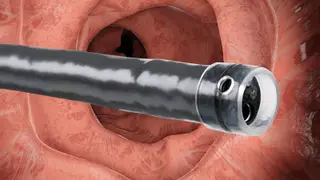
Physicians successfully removed multiple nails that a woman had intentionally swallowed using a specialized colonoscopic technique that employs a protective transparent cap attached to the instrument to prevent perforation of the bowel wall. The case demonstrates that sharp foreign bodies can occasionally lodge in the lower gastrointestinal tract and describes a novel approach for their safe removal while minimizing injury to the mucosal lining. The authors note that such removals remain rare and lack established guidelines, highlighting the need for procedural innovations in managing these complex cases.
Foreign body ingestion occurs across multiple patient populations, including those with psychiatric conditions, developmental delays, and cognitive impairment. In this case, the patient had experienced repeated episodes of intentional swallowing over a 12-month period, indicating an underlying disorder requiring concurrent psychiatric intervention. The positioning of sharp objects like nails in the lower intestinal tract presents particular challenges for medical teams, as the irregular geometry of nails makes them difficult to grasp during retrieval procedures.
The protective cap technique modified the standard colonoscope by adding a transparent polymer covering to its tip. This adaptation served dual purposes: it shielded the sensitive intestinal lining from direct contact with sharp edges while the medical team worked to secure and extract the objects. The procedure required careful maneuvering to position each nail's sharp ends within the cap's protective zone before removal, demonstrating both the innovation and technical demands of this approach.
This case may influence how gastroenterologists approach rare but serious foreign body retrievals in the lower digestive tract, potentially encouraging adoption of protective device modifications in endoscopy. The success could improve outcomes for patients with psychiatric conditions prone to repeated ingestion incidents. However, broader clinical impact may remain limited given the rarity of such cases and current lack of standardized protocols, suggesting that individual institutional experience rather than widespread practice change could be the immediate effect.