Google's Experimental Conveyor Belt Keyboard Reimagines How We Type
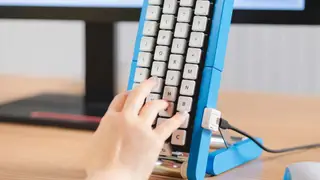
Google Japan unveiled a playful DIY keyboard concept called Gboard Kurukuru that uses four rotating conveyor belts to bring keys to the typist rather than requiring finger movement across a traditional layout. The open-source design allows one-handed typing by waiting for characters to arrive on the moving belts, though it trades hand reach for timing precision. The concept lacks usability testing to validate claims about comfort or typing speed improvements.
Google Japan's Kurukuru keyboard reimagines input mechanics by rotating characters toward stationary fingers rather than requiring hand movement across fixed positions. The device employs four separate conveyor belts, each carrying 29 keys that users interact with through timing rather than reach. The concept theoretically enables single-handed typing while freeing the other hand for peripheral tasks.
The project deliberately omits performance validation. Google has released open-source assembly instructions including 3D-printable components, motor systems, and controller specifications, yet critical documentation for electronics and wireless functionality remains incomplete. This deliberately playful approach—announced on October 1st to reference the standard 101-key layout—positions Kurukuru as a design exploration rather than a market-ready solution.
Kurukuru may influence how designers approach input devices by questioning conventional ergonomic assumptions. The open-source model could inspire accessibility adaptations for users with limited hand mobility, though without usability testing, claims about comfort remain speculative. The project's incomplete documentation and lack of functional validation suggest it serves primarily as a conceptual provocation for maker communities rather than a practical technology adoption pathway for mainstream users.