Saudi-Led Coalition Launches Major Offensive in Yemen as Regional Powers Activate Mutual Defense Pact
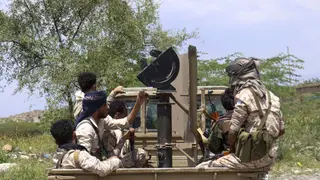
Yemen's government forces, backed by over 100 Saudi fighter jets, claimed to have retaken the strategically critical Bab el-Mandeb Strait and the port of Mocha in a single day of fighting, reversing recent Houthi territorial gains. Following the offensive, defense ministers from Saudi Arabia, Turkey, and Pakistan met in Riyadh to activate deterrence measures under their mutual defense agreement, with Turkey and Pakistan preparing rapid deployment of forces to the kingdom. The United States indicated it would provide intelligence and targeting support for the coalition operations but declined direct military involvement at this time.
The military engagement centers on control of the Bab el-Mandeb Strait, a crucial waterway linking the Red Sea to the Indian Ocean through which global shipping and energy transport depend. Yemen's government claimed rapid territorial recovery after the Houthis had captured significant coastal ground during their September offensive. The reported retaking of Mocha and surrounding highlands represented a strategic reversal, though independent confirmation remains unavailable. Both sides issued competing casualty figures and strike claims that neither side independently verified.
The diplomatic response involved formalizing military cooperation among three nations. Saudi Arabia, Turkey, and Pakistan invoked a defense agreement signed months earlier, committing to deploy personnel and resources to the kingdom. The United States maintained a supporting but limited role, offering intelligence and targeting assistance while avoiding direct combat operations. This coordination reflected concerns that regional instability could widen beyond Yemen's borders.
The activation of a mutual defense pact could signal escalating international involvement in Yemen's conflict, potentially affecting regional stability across the Middle East. Expanded military presence from multiple nations may alter the conflict's trajectory but could also increase risks of miscalculation or expanded hostilities. Global shipping routes through the strait may face disruption, affecting oil markets and international commerce. The positioning of external powers raises questions about conflict resolution timelines and humanitarian consequences for Yemen's civilian population.