State Department Approves $2.2 Billion in Military Sales to UAE, Kuwait, and Egypt
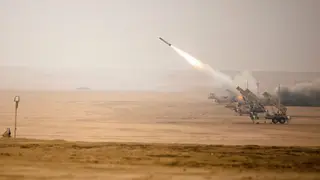
The U.S. State Department approved three foreign military sales to Middle Eastern allies totaling over $2 billion, including $1 billion in advanced missile guidance systems for the UAE, $400 million in Patriot system repairs for Kuwait, and $832 million in Javelin missiles for Egypt. The approvals aim to strengthen the nations' air defense and anti-drone capabilities amid regional tensions and recent Iranian attacks. The sales support U.S. foreign policy objectives while improving interoperability with American forces.
The State Department's approvals reflect ongoing efforts to enhance defensive capabilities among key Middle Eastern partners facing evolving security challenges. The UAE's purchase focuses on precision-guided missile systems suitable for both air-to-air and ground applications, while Kuwait's substantial investment targets maintenance of its decades-old air defense infrastructure. Egypt's Javelin acquisition rounds out the package with portable anti-armor capability, marking continued U.S. commitment to regional allies' military modernization.
These sales occur against a backdrop of escalating regional tensions that have directly threatened American personnel and allied interests. The emphasis on air defense and counter-drone systems indicates shared assessment of current threat environments, with the approvals contingent on maintaining interoperability between partner militaries and U.S. forces operating in the region.
These military sales could strengthen regional allies' defensive postures while expanding U.S. defense contractor business and deepening military integration with Middle Eastern partners. The approvals may influence regional power dynamics and could signal American commitment to Gulf stability, though they also risk escalating military competition. The sales could affect civilian populations through implications for regional conflict dynamics, while generating debate regarding arms sales policy, human rights considerations, and long-term strategic consequences of weapons proliferation in geopolitically sensitive areas.