Lunar Satellites Could Stabilize Earth's GPS Network During Ground Station Outages
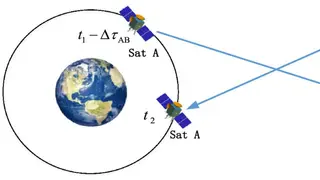
GPS systems rely on ground stations to maintain accurate positioning, but extended outages from disasters or cyberattacks can cause satellite constellations to drift due to Earth's asymmetrical gravity. Researchers propose using satellites orbiting the Moon to provide absolute position references that would allow GPS networks to function independently of ground infrastructure. This novel approach addresses a decades-long engineering challenge that previous solutions involving star trackers and pulsar counters have failed to resolve adequately.
The fundamental challenge stems from Earth's gravitational asymmetry around its axis. While GPS satellites can precisely measure distances from one another using inter-satellite communication, they cannot determine their absolute positions without external references. When ground stations become unavailable due to outages or attacks, all satellites in the same orbital shell drift together, gradually accumulating positioning errors that grow more severe over extended periods.
The proposed solution leverages the Moon's gravitational environment, which differs sufficiently from Earth's to provide independent positional reference data. By incorporating satellites in lunar orbit into the GPS correction network, the system gains a stable external anchor point. The research team's simulation demonstrated that adding four lunar-orbit satellites reduced accumulated drift to one-tenth the level of Earth-only systems, while also providing positioning support for the lunar satellites themselves.
This innovation could enhance GPS resilience for critical infrastructure dependent on continuous positioning accuracy—maritime navigation, telecommunications, power grids, and financial systems may all benefit from reduced vulnerability to ground station disruptions. The approach could also support emerging lunar economy activities by establishing shared navigation infrastructure. However, implementation would require significant investment in lunar satellite deployment and international coordination, potentially limiting near-term practical applications while foundational technologies mature.