Discovery of Magnetized Subsurface Volcano Provides Evidence Moon Once Had Magnetic Field
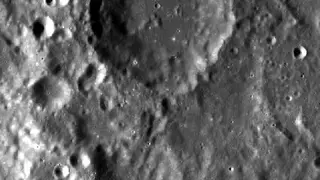
Researchers examining the Dewar Swirl region on the lunar far side have found evidence that the Moon possessed an ancient magnetic dynamo, settling a decades-long scientific debate. The study identified a 60-kilometer-wide subsurface volcanic body buried 5-9 kilometers deep that exhibits both magnetic and gravitational anomalies consistent with past magnetization. Using orbital data from multiple missions and advanced computational analysis, scientists determined that this geologically distinct feature could only have formed in the presence of a functioning lunar magnetic field.
The research team analyzed subsurface composition using gravitational and magnetic readings collected by multiple spacecraft missions spanning decades. By applying computational inversion techniques to this orbital sensor data, they reconstructed the three-dimensional structure of the hidden volcanic formation and confirmed its distinctive physical properties. The 60-kilometer-wide body sits substantially deeper than surface features, positioned within a region already known for concentrations of iron-rich minerals and other elements associated with ancient lunar volcanism.
The brighter appearance of the Dewar Swirl itself reflects a preservation effect: the underlying magnetic field deflects charged solar wind particles away from the surface layer above it, slowing the weathering process that normally darkens lunar regolith over billions of years. In contrast, regions with vertical magnetic orientations experience opposite effects, with particles channeled downward rather than deflected outward, explaining why lunar magnetic anomalies do not uniformly produce visible surface swirls.
This finding may refine scientific understanding of planetary magnetic field generation and early lunar geology, potentially informing models of how celestial bodies lose magnetic properties over time. Such knowledge could enhance future lunar exploration strategies and resource assessment efforts. The research may also impact astrobiology studies by clarifying how ancient magnetic fields could have provided radiation shielding for potential biological activity, though direct evidence for life on the Moon remains absent.