Chinese battery maker WeLion advances semi-solid cells offering higher energy density than lithium-ion
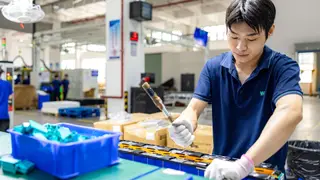
WeLion New Energy is developing semi-solid-state batteries that combine liquid and solid electrolyte components to achieve greater energy density and improved safety compared to conventional lithium-ion cells. The company has already partnered with EV manufacturer Nio to produce battery packs with 360 watt-hour-per-kilogram density, and achieved laboratory results exceeding 800 watt-hours per kilogram in 2025 testing. Semi-solid technology addresses limitations in fully solid-state manufacturing while serving applications from electric vehicles to cargo ships.
WeLion New Energy was established in 2016 and is based in Beijing, with research leadership that includes a scientist from the Chinese Academy of Sciences who previously pioneered the country's first all-solid-state battery prototype decades earlier. The company's approach to semi-solid technology represents a middle path in battery development—full solid-state designs remain commercially impractical due to manufacturing complexity, making the hybrid liquid-solid electrolyte approach a more feasible near-term solution for improving performance.
The partnership with Nio demonstrates early commercial viability, though production remains limited by cost constraints compared to established competitors like CATL. WeLion's work extends beyond passenger vehicles into marine applications, where electric cargo ships and ferries could significantly reduce emissions from China's inland waterway transport network.
Semi-solid battery advancement could reshape transportation energy economics by extending vehicle range and reducing charging frequency, potentially accelerating EV adoption in markets where range anxiety remains a barrier. However, the technology's real-world impact depends on whether companies can overcome manufacturing and cost hurdles to achieve mass production. Success may particularly benefit maritime shipping, where electrification remains underdeveloped, though scaling challenges and unproven durability in commercial use suggest impacts will likely materialize gradually rather than immediately.