Chatham Islands Black Robin Returns from Brink of Extinction to Win Conservation Honor
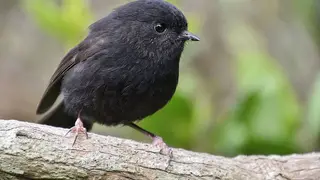
The Chatham Islands black robin, once reduced to just five individuals in 1980, has won New Zealand's 2026 Bird of the Year award with approximately 350 adults now surviving on two predator-free islands. Conservation efforts including cross-fostering techniques, where black robin eggs were raised by native Chatham Island tits, enabled the species' remarkable recovery. Despite this success, the species remains critically endangered as the two islands housing the population may soon lack sufficient resources to support continued population growth.
The black robin's near-extinction stemmed from environmental pressures that eliminated its natural habitat and introduced invasive predators to its island home. By the late 1970s, when only a handful of birds remained with severely limited breeding capacity, the situation seemed irreversible. However, innovative cross-fostering methods allowed conservationists to increase reproductive output by enlisting a related native species to raise robin chicks, fundamentally changing the trajectory of recovery.
The species' resurgence demonstrates how targeted intervention and careful population management across multiple locations can reverse even the most dire circumstances. Recent transfers between the two refuge islands have not only balanced sex ratios but also introduced genetic diversity from different lineages, potentially improving long-term survival prospects and reproductive fitness in ways earlier conservation efforts could not achieve alone.
This recovery could inspire broader investment in island-based conservation programs and foster-parent techniques for other critically endangered bird species worldwide. However, the ongoing space constraints on the two islands may prompt difficult policy discussions about habitat expansion, translocation to new locations, or intensive management protocols. The story may also influence public engagement with New Zealand's conservation priorities, potentially affecting funding allocations and community participation in long-term species recovery initiatives.