A Mother's Grief Three Years After Losing Her Son
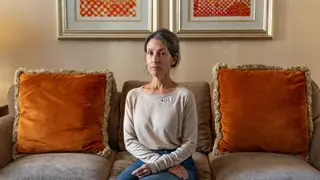
Rachel Goldberg-Polin reflects on the death of her son Hersh, who was taken hostage at a music festival on October 7 and killed after 328 days in captivity. She describes the profound pain of burying a child and the difficulty of moving forward while remaining emotionally frozen in time. The piece explores how others encourage healing while acknowledging that such trauma fundamentally alters a parent's existence.
Rachel Goldberg-Polin's son Hersh was among 251 individuals taken hostage on October 7, 2023, from a music festival. After more than ten months of captivity involving starvation and abuse, he was killed alongside five other hostages. The abductees represented diverse backgrounds across multiple nations and religions, ranging from an infant to an elderly person. Many survivors endured brutal conditions for extended periods before being murdered, with remains eventually returned to families.
The article draws parallels to other historical traumas—the Kennedy assassination, Pearl Harbor, and 9/11—as collective moments when entire populations remember their location and circumstances. Goldberg-Polin describes how such catastrophic loss creates a permanent psychological rupture, where grieving parents exist in a suspended temporal state, unable to progress emotionally despite societal expectations for recovery.
This account may resonate deeply with bereaved parents and others processing profound loss, potentially validating experiences of grief that resist conventional healing timelines. Mental health professionals and grief counselors might find the narrative relevant to discussions about trauma's lasting psychological impact and the limitations of well-intentioned encouragement. The piece could influence public conversation around how societies commemorate collective tragedies and support survivors, while raising awareness that some losses fundamentally restructure identity in ways that transcend typical recovery frameworks.