Cuneiform tablets unlock details of Ur III agricultural operations and land management
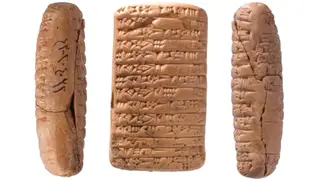
Fifteen cuneiform tablets from the Iraq Museum dating to 2112-2004 BCE document agricultural practices, irrigation systems, land holdings, grain production, and labor organization during the Ur III period in Mesopotamia. The majority of the tablets originate from the Umma region in southern Mesopotamia, with additional examples from the Irisaĝrig archives and possibly from Ur itself. These administrative records provide insights into the economic infrastructure and territorial extent of royal estates spanning thousands of hectares.
The Ur III period represents one of ancient Mesopotamia's most extensively documented eras, and these fifteen tablets add valuable evidence to our understanding of how such civilizations managed their resources at scale. Dating to roughly 2100 BCE, the documents reveal the sophistication of administrative systems governing agricultural production across vast territories in what is now southern Iraq.
The tablets appear to record transactions, property distributions, and workforce assignments related to farming operations. By examining such records from multiple archive locations, scholars can reconstruct how centralized powers coordinated irrigation infrastructure and grain yields across regions, demonstrating the organizational complexity required to sustain early urban societies.
This discovery may deepen academic understanding of ancient economic systems and environmental management practices, potentially informing how historians model premodern societies' approaches to large-scale agriculture. For scholars of cuneiform and Mesopotamian studies, the documents could refine chronologies and administrative hierarchies. While largely of specialized scholarly interest, such findings contribute incrementally to broader knowledge about how early civilizations engineered food security and territorial governance—questions relevant to understanding human organizational development.