New Analysis of Franklin's Archives Suggests She Recognized DNA's Double Helix Structure First
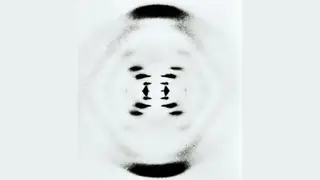
A recent examination of Rosalind Franklin's archival materials indicates she understood DNA's helical structure before Watson and Crick received credit for the discovery. Researchers found that her famous Photograph 51, taken in May 1952, was deliberately created as a refined version of an earlier image, suggesting Franklin recognized the significance of her findings. The deliberate effort to obtain a superior photograph demonstrates her awareness that she had made a crucial scientific breakthrough.
Franklin's archival records demonstrate that she deliberately pursued a superior photographic image of the same DNA sample within hours of capturing her initial exposure. This methodical approach—creating a refined version specifically for presentation purposes—contradicts long-standing claims that Franklin merely documented her findings without recognizing their significance. Her contemporaneous notes substantiate that she had already identified structural patterns suggesting a helical configuration in her preliminary work.
The new research distinguishes between Franklin's two photographs based on their intended scientific purpose: one served as exploratory documentation capturing novel data, while the other functioned as a polished presentation intended to communicate findings with maximum precision. This dual-image strategy reflects deliberate scientific judgment rather than accidental discovery.
This analysis may influence how scientific history is taught and how credit for foundational discoveries is attributed. Recognizing Franklin's interpretive capabilities could reshape narratives about women's contributions to major scientific breakthroughs and challenge assumptions about female scientists' analytical roles in mid-twentieth-century research. The findings might prompt broader institutional reassessment of historical documentation practices and whose interpretations of data have been privileged or overlooked in scientific record-keeping.