Startup FireDome Deploys Autonomous Projectile Launcher System for Rapid Wildfire Suppression
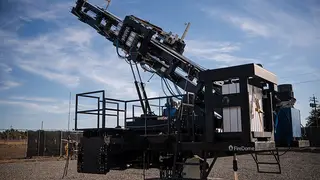
FireDome has developed an autonomous ground-based launcher system capable of firing water and fire retardant projectiles up to 1,000 feet to create protective firebreaks and suppress wildfires before firefighter arrival. The startup addresses a critical gap in wildfire response by shifting focus from detection alone to active suppression at the wildland-urban interface. The system operates as a fully autonomous platform positioned near communities and infrastructure, able to respond immediately when fire threats materialize.
FireDome emerged from a 2024 climate technology conference in Israel where co-founders Gadi Benjamini and Dr. Adi Naor Pomerantz identified a critical shortfall in wildfire response infrastructure. While existing technologies focused primarily on early detection, they recognized that the time gap between fire discovery and firefighter arrival left communities vulnerable. The founders initially explored deploying autonomous suppression systems deep within wildlands, but determined that practical coverage limitations—requiring 1 to 1.5 miles of effective range—made such widespread deployment currently infeasible.
Rather than pursue a comprehensive wildland solution, FireDome redirected its strategy toward protecting defined geographic areas: residential communities, infrastructure facilities, and property zones along the wildland-urban interface. This tactical pivot acknowledges that wildfire management requires multiple specialized approaches rather than any single comprehensive technology. The company's ground-based launcher system, capable of projecting water and retardant payloads approximately 1,000 feet, addresses a specific vulnerability window in community protection protocols.
FireDome's autonomous suppression platform could potentially reshape insurance and economic risk calculations for communities in fire-prone regions, as demonstrated fire-safety measures may influence coverage eligibility. The technology may also alter emergency response workflows by introducing pre-positioned automated assets that reduce response time before professional firefighters arrive. However, questions remain about system deployment costs, maintenance requirements, and how such autonomous systems integrate with existing fire management hierarchies. Effectiveness may vary significantly depending on local geography, weather patterns, and the specific fire behaviors encountered.