Pons Blockchain Platform Sees Revenue Plummet 80% as Gas Subsidy Effects Wear Off
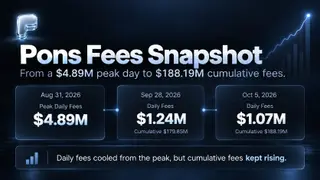
Pons revenue has collapsed from a peak of $4.89 million daily to approximately $1 million as market conditions shifted and subsidies ended. The decline began before Robinhood discontinued its gas subsidy program, suggesting structural changes in blockchain activity rather than support withdrawal alone. Despite continued billions in weekly trading volume on Robinhood Chain, the fee generation that drove earlier profitability has largely evaporated.
Pons Blockchain Platform experienced a dramatic contraction in its revenue generation, declining sharply from peak daily earnings of approximately $4.89 million to roughly $1 million currently. The timing of this downturn raises questions about its underlying causes, as the collapse initiated prior to Robinhood's decision to withdraw its gas subsidy initiative—suggesting the platform faces deeper structural challenges beyond the loss of financial support mechanisms alone.
Despite this significant revenue decline, the Robinhood Chain ecosystem continues to process substantial weekly trading volumes measured in the billions, indicating that overall user activity persists. However, this sustained transaction volume has not translated into comparable fee-generating capability for the Pons platform, pointing to a fundamental shift in how the network's economics function under current market conditions.
The revenue collapse at Pons could affect cryptocurrency developers, users relying on low-cost transactions, and investors in blockchain infrastructure platforms. Reduced fee generation may constrain the platform's ability to fund development and maintenance. The persistence of high trading volume despite lower fee capture suggests market participants may have adapted their behavior or migrated activities, which could impact the competitive positioning of blockchain platforms dependent on fee-based revenue models.