NASA Seeks Solutions to Prevent Dangerous Electrical Buildup on Lunar Spacesuits
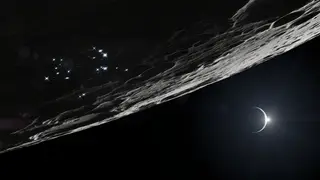
NASA has launched a challenge to develop technology that safely discharges electrical charge accumulated on astronaut spacesuits during lunar surface exploration near the South Pole. Spacesuits can build up dangerous negative electrical potential from friction and plasma exposure, creating a hazard of electrostatic discharge when astronauts return to their lander. The challenge offers up to $150,000 in prizes for innovative designs and operational solutions to solve this critical safety problem, with submissions due by January 15, 2027.
NASA's Lunar Grounding Challenge addresses a physics problem unique to the Moon's South Pole environment. As astronauts walk across the lunar surface, friction generates electrical charge on their suits, while the sparse plasma in shadowed regions prevents natural discharge. Unlike Earth, the Moon lacks atmospheric mechanisms to dissipate this accumulated energy safely.
The hazard intensifies upon return to the lander. The stationary spacecraft maintains a positive electrical charge in sunlight, creating a severe voltage gap with a negatively-charged astronaut. This differential can trigger dangerous arcs of electricity during contact, potentially compromising suit integrity, disabling life-support electronics, and harming crew members. NASA's competition seeks creative technological or procedural answers to neutralize this charge before physical interaction occurs.
Solving this electrostatic hazard could directly enable safer long-term lunar exploration, particularly for NASA's planned South Pole missions. Successfully mitigating ESD risks may reduce mission delays and allow astronauts to work longer on the surface. The challenge's open competition format may accelerate innovation from private companies and research institutions. However, if solutions prove impractical or unreliable, the problem could constrain where and how long crews can operate during future lunar activities.