Inflatable Barrier Technology Provides Rapid Flood Protection for Vulnerable Communities
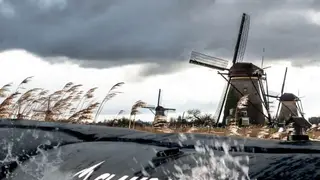
WaveSave manufactures deployable rubber dams called SlamDam that communities can quickly inflate during floods to protect property, critical infrastructure, and freshwater supplies in areas at risk from rising sea levels and extreme weather. The portable barrier, reaching heights up to 1.3 meters, requires no specialized geology or permanent installation and has been successfully deployed across Europe, Africa, and Southeast Asia to protect farmland, hospitals, and water treatment facilities. With climate change expected to expose nearly 2 billion people to flood risks by 2100, the technology addresses a critical adaptation need for vulnerable populations worldwide.
WaveSave's SlamDam technology emerged from development work that began in 2013 within the Netherlands, where regional water management authorities continue to rely on the system today. The company has since broadened its geographic reach to deploy barriers across multiple continents, with installations now documented in at least twelve countries spanning Europe, Africa, and Southeast Asia. The barriers are engineered to achieve heights of up to 1.3 meters and remain functional for over four decades, making them long-term investments for communities requiring repeated flood protection.
Beyond immediate flood defense, the technology offers secondary benefits particularly relevant to agricultural regions. In areas experiencing seasonal water scarcity, the water stored within deployed barriers can be accessed afterward for crop irrigation, potentially increasing agricultural productivity during dry periods. A documented case in Burundi demonstrated this dual-use potential, where farmers gained access to stored water and reportedly doubled their annual income during the deployment year.
The technology addresses an adaptation gap for populations lacking resources for permanent infrastructure solutions or relocation. As flood exposure is projected to affect nearly 2 billion people by 2100, portable barriers could serve vulnerable communities unable to afford traditional flood defense systems. However, deployment challenges—including questions of ownership, management responsibility, and initial capital requirements—may limit adoption rates. The solution's effectiveness ultimately depends on community capacity and institutional frameworks beyond the technology itself.