Novel Bacterial Enzyme Degrades Bioplastics but May Enable Antibiotic Resistance
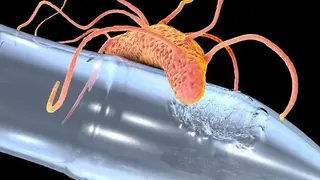
Researchers at the University of Konstanz identified a bacterial enzyme with an unusually wide active site that can break down certain polyesters and bioplastics, which they named the "Pac-Man enzyme" based on its structure. Laboratory testing revealed this same enzyme can also cleave penicillin, raising concerns about its potential role in bacterial antibiotic resistance mechanisms. The discovery emerged from investigating whether microbial communities could fully degrade long-chain aliphatic polyesters buried in forest soil, highlighting unexpected connections between plastic digestion and resistance to antibiotics.
The research team conducted a year-long field study by placing biodegradable plastic samples in forest soil, then monitored their decomposition through carbon dioxide measurements and microscopic analysis. They found that various bioplastic formulations were completely consumed by microbial communities within 250 to 330 days, while conventional high-density plastics showed virtually no degradation. The electron microscopy revealed a striking pattern: the plastic films bore microscopic perforations matching individual bacterial cell dimensions, suggesting direct microbial consumption of the material.
The enzyme's unusually large active site—which earned it the "Pac-Man" nickname—enables it to process both polyester polymers and penicillin antibiotics. This dual functionality emerged unexpectedly during laboratory characterization and raises questions about how bacteria originally evolved this capability and whether it exists as part of broader resistance mechanisms in natural soil ecosystems.
This discovery presents a dual-edged prospect for biotechnology and public health. The enzyme could accelerate bioplastic degradation, potentially addressing accumulating waste in landfills and ecosystems. However, if bacteria harness this same enzymatic capacity for antibiotic resistance, it may complicate treatment options for infections. Further research could determine whether this mechanism actively contributes to antibiotic resistance development in clinical settings or remains confined to soil microbiomes, influencing both waste management strategies and antibiotic stewardship approaches.