Tropical disturbance in Gulf poses potential hurricane threat to U.S. coast by week's end
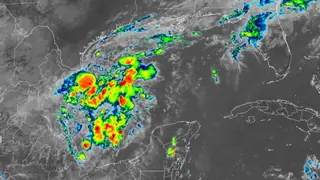
An unnamed tropical disturbance over the southwestern Gulf of Mexico has a 60% chance of developing into a named storm within 48 hours and 80% chance within a week, with potential landfall on the U.S. Gulf Coast by Friday. The system is expected to drift eastward before turning north and accelerating toward the coast, though forecasters note model uncertainty remains high until a well-defined circulation develops. Meanwhile, the Pacific basin is experiencing increased tropical activity, with Super Typhoon Choi-wan reaching Category 5 status.
A tropical disturbance currently positioned in the southwestern Gulf of Mexico has captured forecasters' attention following weeks of relative calm in the Atlantic basin. Computer models remain uncertain about the system's exact path and strength until it develops a more organized structure, though multiple prediction systems suggest potential impacts to the central U.S. Gulf Coast by the end of the week. The gradual northward and eastward movement expected over the next several days provides a window for organization as the system interacts with atmospheric moisture and frontal boundaries.
Gulf waters are running abnormally warm for early October—approximately half a degree Celsius above any previously recorded temperature for this date—creating favorable conditions for tropical development. However, wind shear patterns could initially inhibit organization by separating thunderstorms from the circulation center, though forecasters believe these atmospheric constraints may ease as the week progresses.
Residents across Louisiana and Florida face potential disruption if this system develops and tracks toward the Gulf Coast as forecast models suggest. The threat could affect coastal communities through heavy rainfall, storm surge, and gusty winds, while inland residents may experience significant impacts depending on the system's ultimate strength and trajectory. Preparation efforts and emergency management planning across the affected regions could begin based on increasing confidence in development probabilities over the coming days.