U.S. Stock Indexes Hit Fresh Highs as Bond Yields Fall and Volatility Eases
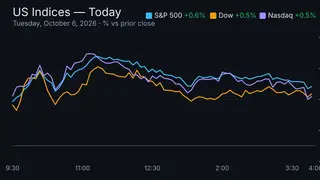
Major U.S. stock indexes reached record levels on Tuesday, with the S&P 500 and Nasdaq climbing more than 0.4% each amid declining Treasury yields and reduced market volatility. Strong corporate profit expectations and easing global inflation concerns, reflected in lower crude oil prices, drove broad market gains despite a decade-low consumer confidence reading. Notable movers included a 32.7% surge in Option Care Health following a $5 billion acquisition proposal and a 14% jump in Constellation Energy after securing a nuclear power supply deal with Google.
Tuesday's market performance was driven by a confluence of favorable conditions across multiple fronts. Treasury yields declined to 5.25% on the 10-year note, easing borrowing costs and supporting equity valuations. Simultaneously, crude oil prices weakened substantially, suggesting moderating inflationary pressures globally. The broad rally encompassed large-cap stocks across both the S&P 500 and Nasdaq, though smaller companies lagged behind as the Russell 2000 declined.
Two major corporate announcements amplified sector-specific momentum. McKesson and Clayton Dubilier & Rice's $5 billion acquisition proposal for Option Care Health energized healthcare services, while Constellation Energy's long-term nuclear supply agreement with Google sparked enthusiasm across utilities and infrastructure stocks. These deals underscored investor confidence in both healthcare consolidation and infrastructure spending tied to artificial intelligence infrastructure development.
Market movements of this magnitude could influence consumer and business spending decisions, as equity gains may affect household wealth and corporate investment plans. Declining yields could reshape borrowing patterns across financial markets, potentially affecting mortgage rates and credit availability. However, the decade-low consumer confidence reading suggests households remain cautious despite stock market strength, indicating possible divergence between asset prices and consumer sentiment that policymakers and economists may monitor closely.