Triple Drug Combination Shows Promise for Treatment-Resistant Lung Cancer
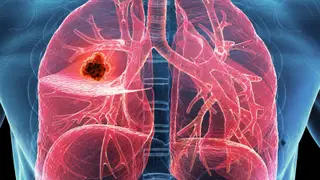
A phase II study found that a combination of three targeted drugs—amivantamab, lazertinib, and bevacizumab—achieved a 39% overall response rate in patients with EGFR-mutant lung cancer that had become resistant to standard third-generation inhibitors. The treatment approach, which avoids chemotherapy, produced a median progression-free survival of 10.9 months and median overall survival of 19.9 months. This represents the first prospective trial examining this specific triplet biologic combination targeting multiple cancer-related pathways.
Patients with advanced lung cancer carrying EGFR mutations typically receive third-generation tyrosine kinase inhibitors as initial treatment, yet most eventually develop resistance to these drugs. The three-drug approach combines two targeted therapies—one that blocks both EGFR and MET proteins, another that inhibits EGFR directly—with an agent that cuts off tumor blood supply. This avoids traditional chemotherapy while attacking cancer through multiple biological pathways simultaneously.
The study's median overall survival of nearly 20 months represents a meaningful benchmark in a difficult treatment scenario where resistance has already emerged. Notably, this single-arm trial, while meeting its primary endpoint, lacked a direct comparison group, leaving open questions about whether results reflect the drug combination's superiority or characteristics of the enrolled patient population.
If validated through larger trials, this chemotherapy-free option could improve quality of life for thousands of lung cancer patients annually by reducing treatment toxicity. However, the modest response rate relative to survival duration suggests individual patient selection may be critical for success. Healthcare systems would need to weigh treatment costs and complexity against potential benefits, while further research should clarify which patients derive the most durable advantage from this approach.