TwelveLabs Releases Video Analysis Tool to Help Robots Learn from Human Actions
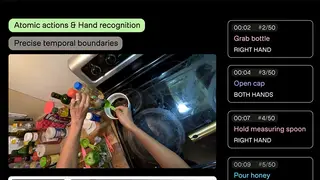
TwelveLabs released Pegasus 1.6, a video understanding model designed to help robotics developers train machines by analyzing first-person footage of human work and physical tasks. The model can provide temporal context, spatial reasoning, and task completion analysis, transforming raw video into structured knowledge that robots and autonomous systems can learn from. The capability addresses a key challenge in physical AI development by converting real-world human experience into training data that machines can understand.
TwelveLabs, founded in 2021, has developed a video intelligence platform combining two core models—Marengo and Pegasus—designed to interpret video content with human-like comprehension. The company's latest release represents a significant pivot toward robotics applications, addressing a fundamental bottleneck: converting unstructured video footage into machine-readable training datasets. By focusing specifically on first-person perspectives rather than traditional broadcast or instructional footage, the technology can capture nuanced physical behaviors like grip adjustments and error recovery that have historically been difficult to encode for machine learning.
The model's five supported workflows include action segmentation with time-stamped labels and analysis across various hardware without requiring proprietary camera systems. This flexibility potentially lowers adoption barriers for robotics developers who can leverage existing video collections rather than conducting costly new data collection campaigns.
This development could significantly accelerate robotics training by reducing dependency on expensive teleoperation systems and synthetic data. Manufacturers, logistics companies, and autonomous system developers might benefit from faster model development cycles and lower implementation costs. However, widespread adoption of such technology could raise questions about labor dynamics and worker surveillance if first-person footage becomes routinely captured for training purposes, warranting consideration of privacy frameworks alongside technological advancement.