European Union Adopts Unified Space Defense Framework
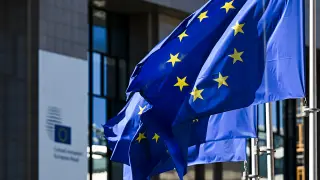
The European Union's 27 member states have approved a collective defense mechanism allowing coordinated political, economic, or military responses to threats against any nation's space infrastructure and satellites. The decision expands upon the EU's 2021 Space Threat Response Architecture to cover member state satellites beyond jointly operated systems like Galileo and Copernicus. This move reflects the EU's broader strategy to achieve strategic autonomy in space security independent of individual member responses.
The EU's new framework represents a significant evolution from its 2021 predecessor, which applied only to jointly managed systems like Galileo and Copernicus. The September 2026 decision broadens coverage to encompass member state satellites and related infrastructure, addressing threats ranging from cyber attacks to supply chain disruptions. This expansion grants the EU's High Representative expanded authority to respond swiftly to urgent situations without requiring consensus from all 27 nations, introducing greater flexibility into collective decision-making.
The framework carries particular significance for EU members outside NATO—Austria, Cyprus, Ireland, and Malta—who previously lacked collective security guarantees for space infrastructure. For NATO members, the mechanism offers an alternative response pathway independent of alliance protocols, potentially enabling the EU to act when NATO chooses not to intervene or when threats fall outside traditional collective defense frameworks.
This decision could reshape how European nations approach space security challenges, moving from individual member responses toward unified continental strategy. The framework may influence broader geopolitical dynamics by strengthening European autonomy from U.S. or NATO-led responses, potentially affecting technology partnerships and defense procurement. Non-aligned EU members gain new security assurances, while NATO members gain operational flexibility. How the EU actually deploys these collective mechanisms when threats materialize will significantly determine whether this framework becomes a consequential deterrent or remains largely symbolic.