Israel and Turkey Positioning for Strategic Confrontation Across Horn of Africa and Eastern Mediterranean
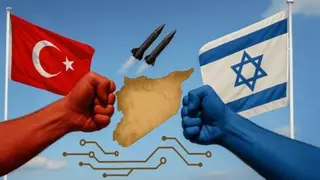
Analysis suggests Israel's recognition of Somaliland represents positioning against both Houthis and Turkish influence in the Red Sea region, with Somaliland officials previously seeking Israeli military support against Turkish forces stationed in Somalia. Somali President Sheikh Hassan Mohamud warned that Israel plans to establish a naval base in Somaliland's port city of Berbera, which Mogadishu opposes as the separatist territory is claimed by Somalia. Regional tensions are escalating as both Israel and Turkey arm allied factions, with potential conflict extending from the Horn of Africa to the Eastern Mediterranean.
Israel's diplomatic recognition of Somaliland appears designed to create strategic advantages across multiple theaters. Somaliland officials have explicitly requested Israeli military assistance to counter Turkish military deployments in Somalia, including F-16 aircraft and drone systems. Meanwhile, Somalia's government, equipped with Turkish-supplied helicopters, tanks, and UAVs, has warned against Israeli military installation in the contested territory—particularly a potential naval facility in Berbera that could project power into the Red Sea.
Regional polarization extends beyond the Horn of Africa into the Eastern Mediterranean, where Greece has committed substantial defense spending aligned with Israeli capabilities and doctrine. Turkey's repositioning of special forces units near Greek maritime borders and Greece's parallel military modernization through Israeli arms purchases suggest competing spheres of influence taking concrete form. Both regions reflect broader alignment patterns reshaping alliances across three continents.
These escalating military postures could significantly affect civilian populations across the Horn of Africa and Eastern Mediterranean through potential conflict spillover, disrupted shipping lanes, and refugee displacement. Regional powers' arms acquisitions may increase tensions and reduce diplomatic flexibility. Global energy security may be impacted given strategic chokepoints involved. The alignment of external powers—Israel, Turkey, Greece, and others—could transform localized disputes into wider proxy confrontations, potentially affecting international stability and humanitarian conditions for millions in affected regions.