South Carolina general election will test GOP hold on state legislature following primary season losses
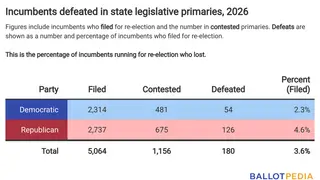
Republican state legislators experienced primary election losses at twice the rate of Democrats in 2026, with 4.6 percent of GOP incumbents defeated compared to 2.3 percent of Democratic incumbents. South Carolina voters will determine on November 3 whether Republicans retain their state legislative supermajority, with the outcome potentially affected by the unusual number of primary upsets. Wyoming, South Dakota, and West Virginia saw the highest incumbent primary loss rates, all among Republican-controlled legislatures.
The 2026 primary season saw unusual turbulence in state legislative races, with Republican incumbents facing primary defeats at double the rate of their Democratic counterparts. This disparity reflects a broader pattern in Republican-controlled states, where more incumbents faced contested primaries than in previous election cycles. Wyoming, South Dakota, and West Virginia experienced particularly severe primary upheaval, with over 15 percent of their incumbent legislators losing re-election bids to challengers within their own parties.
Several long-serving legislators and party leaders fell to primary challengers this year, including a North Carolina Senate president pro tempore who lost by just 23 votes. Connecticut's Patricia Dillon, who had served since 1985, became the longest-tenured state legislator to lose a primary in 2026, signaling potential shifts in voter preferences across multiple states and experience levels.
The outsized primary losses among Republican legislators could reshape state governance structures. If this primary volatility translates to general election shifts, Republicans' legislative supermajorities—particularly in South Carolina and other affected states—may weaken or disappear. Such changes could affect education funding, healthcare policy, and tax decisions at the state level. The results may also indicate broader voter frustration with incumbent politicians or shifting ideological preferences within party bases, potentially influencing how state legislators approach controversial issues in coming years.