From Spider Lilies to Lotus Blossoms: How Architects Turn Botanical Forms Into Structural Innovation
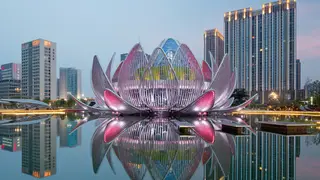
Architects throughout history have drawn inspiration from flowers to create both aesthetically striking and functionally efficient buildings, with contemporary examples ranging from the Burj Khalifa's spider-lily-inspired design to China's Lotus Conference Center. Modern flower-inspired architecture transforms botanical elements into practical solutions, using petal-like facades to manage light and heat while maintaining visual elegance. The trend demonstrates how biomimetic design principles allow architects to merge nature's forms with engineering requirements across cultures and climates.
The practice of integrating botanical elements into architecture spans millennia, from ancient Greek capitals adorned with acanthus leaves to Islamic geometric patterns meant to represent paradise. Art Nouveau later revived this tradition by transforming metal and glass into organic forms. Today's flower-inspired designs extend beyond mere aesthetics, embedding natural geometry into engineering solutions that address practical challenges like structural stability and climate control.
Contemporary projects demonstrate how specific botanical features solve distinct architectural problems. The Burj Khalifa employs the spider lily's radial symmetry to distribute wind forces efficiently, while the Lotus Conference Center incorporates geothermal systems and evaporative cooling beneath its petal-shaped volumes. These examples show how biomimicry translates natural efficiency into human-scaled structures across different geographic and cultural contexts.
Flower-inspired architecture may influence urban development priorities by demonstrating that visual beauty and functional performance need not compete. Real estate markets and municipal planners could increasingly seek designs that balance aesthetic appeal with environmental efficiency, potentially shaping construction practices globally. However, such sophisticated biomimetic design often requires specialized expertise and investment, which could affect accessibility for projects in regions with fewer resources or established design networks.