Dalio Flags Foreign Creditor Risk to Treasury Market While Fed Economist Points to Leveraged Hedge Fund Exposure
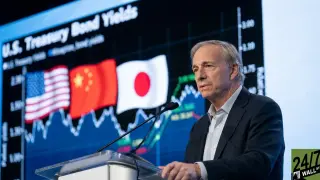
Ray Dalio cautioned that China and Japan, which together hold roughly $1.7 trillion in U.S. Treasuries, may reduce their holdings due to geopolitical and economic concerns, threatening demand for approximately one-third of U.S. borrowing. A Federal Reserve economist countered that hedge funds present a greater systemic risk, holding $4 trillion in gross Treasury exposure with 20x leverage. Morgan Stanley estimates the Treasury basis trade contracted by 20% this year to $1.2 trillion, suggesting the immediate hedge fund risk may be moderating.
The Treasury market's reliance on foreign capital has shifted significantly in recent years. While foreign entities held nearly 40% of publicly traded U.S. debt following the 2008 financial crisis, that share has declined to approximately 31% by late 2025. Japan and China's combined $1.7 trillion in Treasury holdings represent meaningful but diminishing foreign exposure, with recent monthly data showing both countries reducing positions—though interpretations of these moves vary between strategic pullback and temporary currency-related adjustments.
The hedge fund exposure presents a different structural concern centered on leverage rather than geopolitical intent. With $4 trillion in gross Treasury exposure deployed at 20x leverage, concentrated bets in the Treasury basis trade create potential cascade risks if positions unwind simultaneously. However, Morgan Stanley's analysis suggests this particular risk may be easing, with the basis trade contracting by one-fifth during the current year to $1.2 trillion.
Treasury market stability directly affects borrowing costs for federal, corporate, and consumer debt. Reduced foreign demand could pressure yields and increase U.S. financing costs, potentially raising mortgage rates and credit expenses for households and businesses. Conversely, leveraged hedge fund positions could create sudden volatility if forced liquidations occur, disrupting price discovery. Policymakers face competing concerns: managing long-term foreign capital flows versus monitoring shorter-term leverage concentrations that could trigger systemic instability regardless of underlying fundamentals.