PepsiCo Faces Credibility Test as Analyst Strips Growth Classification Before Earnings
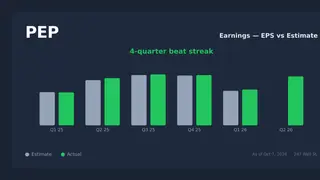
PepsiCo must demonstrate strong organic growth metrics when reporting third-quarter results on October 8 after analyst Jim Cramer recently downgraded the company from growth stock status, citing competitive threats from GLP-1 appetite-suppressing drugs and changing consumer preferences among younger demographics. The beverage and snack manufacturer's shares have declined 9% year-to-date and currently trade near their 52-week lows despite achieving strong long-term returns. Management's ability to meet guidance for 2-4% organic growth will depend critically on North America Foods volume and core operating margin performance.
PepsiCo's credibility challenge stems from a fundamental shift in how Wall Street views the company. Over the past decade, the stock delivered solid returns, but recent years have revealed weakness—a five-year decline that contradicts the longer-term narrative. This disconnect mirrors broader market skepticism about whether traditional consumer staples can adapt to structural headwinds like prescription weight-loss medications and demographic shifts toward healthier consumption patterns.
The specific metrics that will determine Thursday's market reaction are surprisingly focused. Investors should monitor whether North America Foods volume rebounds after recent pricing strategies, and whether management can arrest the core operating margin compression seen in recent quarters. These two data points will either validate PepsiCo's ability to achieve its 2-4% organic growth target or confirm that deeper competitive challenges have taken hold.
How PepsiCo performs could influence investor confidence in established consumer staples more broadly. Successful navigation of GLP-1 medication competition and younger consumer preferences may reassure shareholders that legacy food companies can adapt; conversely, disappointing results could accelerate capital flows toward health-focused alternatives. For consumers, the outcome may affect product innovation priorities and pricing strategies across the snacking industry, potentially influencing food accessibility and choice in mainstream retail channels.