Federal Law Prohibits Military Deployment at Polling Places Even in Emergencies
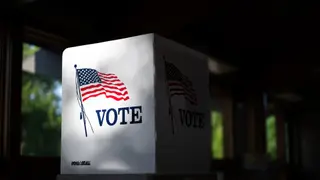
Section 592 of federal law and related statutes bar the deployment of federal troops or armed law enforcement at polling places and criminalize military interference in elections, prohibitions that predate the Civil War by decades. The article refutes a 1968 Office of Legal Counsel memo that claimed the Insurrection Act could create an exception to this prohibition, demonstrating through statutory interpretation that Congress's 1909 revision of Section 592 specifically removed exceptions and should take precedence as the more recent and election-specific statute. These longstanding restrictions reflect Congress's intent to prevent military involvement in American elections regardless of claimed emergency circumstances.
Federal restrictions on military presence at polling places have deep historical roots, originating as a response to Civil War-era interference in border state elections. The prohibition was formalized through legislative action in 1865 and subsequently strengthened in 1909 when Congress removed language that had previously permitted troops to maintain order at polling sites. This 1909 revision is significant because it represents the most recent congressional statement on the matter and specifically targets election-related concerns, distinguishing it from broader emergency powers granted under the Insurrection Act.
The legal dispute centers on competing statutory interpretations. While a 1968 Office of Legal Counsel memo suggested the Insurrection Act could override polling place restrictions during emergencies, that memo lacked detailed legal reasoning and has never been followed by subsequent published OLC guidance. Modern legal analysis challenges this interpretation by applying standard rules: when statutes conflict, later-enacted and more specific laws typically prevail over earlier and broader ones, suggesting the 1909 election-specific prohibition should take precedence over emergency authority frameworks.
The clarification of these legal boundaries could significantly affect how federal authorities respond to election-related emergencies. Citizens and election officials may gain clearer assurance regarding military involvement restrictions, potentially reducing anxieties about armed deployment during voting. Conversely, law enforcement and executive officials might face constrained options if genuine security threats emerge at polling locations, potentially requiring alternative response mechanisms. The resolution of this legal question may shape future emergency protocols and executive decision-making during contested election periods.