Chinese nuclear clock technology surpasses European counterpart in precision
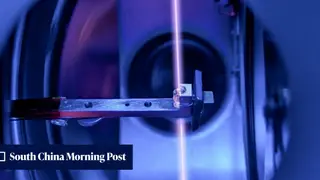
Research published in Nature reveals that China's newly developed thorium-229 nuclear clock demonstrates approximately six times greater stability than a comparable timepiece created by researchers in Vienna. Both teams independently constructed nuclear clocks using thorium-229 nuclei embedded in crystals to measure time through atomic resonance rather than traditional electron-based methods. Beijing scientists further demonstrated reproducibility by showing that separately grown crystal samples maintained synchronized timekeeping, while the Vienna team explored applications in dark matter detection.
Nuclear clocks represent a fundamental shift in timekeeping technology, measuring time through the vibrations of atomic nuclei rather than electron behavior used in conventional atomic clocks. The thorium-229 isotope, which both research teams selected independently, offers exceptional stability as a timekeeping medium when integrated into crystal structures. This parallel development by leading institutions in China and Europe demonstrates the global significance of this technological frontier.
The Chinese team's demonstration that separately manufactured crystal samples maintain synchronized timekeeping suggests that nuclear clock technology may transition from laboratory experiments to reproducible, manufacturable systems. In contrast, the Vienna researchers have pursued alternative applications, attempting to leverage their clock's precision to detect dark matter particles. These divergent approaches reflect different research priorities within the broader field of advanced timekeeping.
More precise timekeeping could affect multiple sectors including telecommunications, GPS navigation systems, and fundamental physics research. Improved atomic standards might enhance financial transaction accuracy and scientific measurements. The competitive development suggests this technology may eventually enter practical applications, though significant engineering challenges remain before widespread deployment. The research also illustrates how technological advancement increasingly occurs through simultaneous independent breakthroughs rather than sequential discovery.