Google Releases Public AI Content Detection Tool SynthID Detector
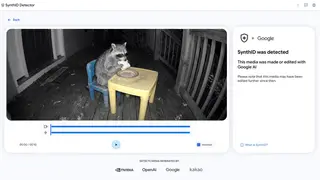
Google has made SynthID Detector publicly available at synthid.com, a free web tool that identifies AI-generated and AI-edited images, video, and audio from multiple companies including OpenAI, NVIDIA, and Kakao. The detector works by identifying SynthID watermarks embedded in synthetic content and will soon support detection of Apple Intelligence-created images. The tool has limitations including inability to detect all AI-generated content and difficulty distinguishing between fully synthetic and partially edited material.
Google's rollout of SynthID Detector represents an expansion of technology the company has been refining since at least 2024, when it was restricted to journalists and media professionals. The tool functions by identifying watermarks embedded within synthetic media rather than analyzing content characteristics, making it dependent on participating companies to adopt the watermarking standard. Beyond the web interface, Google has integrated detection capabilities into its existing products like Circle to Search and Gemini, offering multiple pathways for users to verify content authenticity.
The detector's effectiveness is constrained by industry fragmentation. Since watermarking standards vary across AI developers, no single tool can identify all synthetic content, and watermarks may be removed through various processing techniques. Additionally, the tool cannot differentiate between fully synthetic creations and partially edited material, limiting its utility for detailed forensic analysis of how content was modified.
SynthID Detector could influence how individuals and organizations verify digital content authenticity, potentially affecting misinformation detection workflows. Media professionals and social platforms may find value in the tool's accessibility, though its limitations suggest it may serve as a preliminary screening mechanism rather than definitive proof. The reliance on industry adoption of watermarking standards indicates that detection capabilities may remain incomplete without broader standardization—a challenge that could affect public trust in digital media verification across various sectors.