HPE Gains 40% in One Month on AI Infrastructure Opportunity, But Valuation Now Prices in Unproven Growth
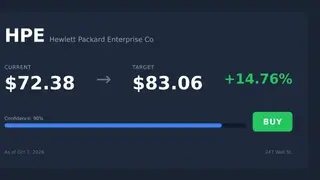
Hewlett Packard Enterprise shares rocketed 40% in a single month after announcing a $1.2 billion AI server order from Vultr and raising networking revenue growth guidance to near 20%, substantially outpacing gains from competitors Super Micro Computer and Dell. The surge reflects a company-specific rerating of HPE's networking business rather than a broad sector rally, with the stock now trading at valuations dependent on achieving multi-year targets. Investors must weigh whether the rally captures real structural benefits from the Juniper acquisition and emerging AI infrastructure demand or represents excessive enthusiasm based on limited near-term catalysts.
Hewlett Packard Enterprise's recent valuation surge reflects investor confidence in its networking division following the Juniper acquisition. The company's $1.2 billion agreement with Vultr demonstrates concrete demand for AI infrastructure, while its revised guidance projects networking revenues growing in the high-teens to low-twenties range near-term, with far more ambitious long-term targets calling for 50%+ compound annual growth in data center networking.
This performance diverges sharply from peers Super Micro Computer and Dell, which posted more modest gains over the same period. The distinction matters because HPE's valuation now depends on achieving multi-year targets that remain largely unproven, with a single customer order and projected cost savings from the Juniper integration serving as primary supports for the 40% appreciation.
HPE's stock movement could signal shifting market dynamics in AI infrastructure investment, potentially attracting capital toward networking-focused suppliers. However, if valuation expectations outpace actual revenue delivery, investors face potential losses that may influence broader technology sector confidence. The outcome could affect capital allocation strategies for data center operators and other enterprises planning AI infrastructure investments, determining whether networking becomes a premium-valued business segment or contracts if growth targets prove elusive.