Army Awards Nearly $94 Million to Nine Firms for Next-Generation Command Software
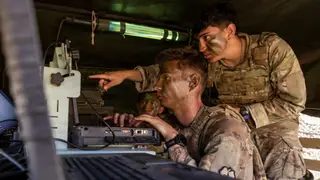
The U.S. Army distributed approximately $93.6 million in contracts across nine companies to develop software applications supporting its Next Generation Command and Control initiative, with initial one-year periods for all awards. These applications will enable enhanced planning, coordination, and decision-making across multiple operational domains including fires, intelligence, and logistics for I Corps in the Pacific. The effort represents a critical phase in scaling NGC2 technology across the military force.
The nine contractor awards represent a pivotal expansion phase for NGC2 technology, which the Army is methodically scaling from initial development toward corps-wide deployment. I Corps in the Pacific serves as the first operational test bed, where these software applications will integrate planning and decision-making across six interconnected military functions—from targeting and intelligence analysis to troop movement and supply chain management. The staggered one-year contract periods suggest the Army is maintaining flexibility to evaluate performance before committing to longer-term arrangements.
This announcement follows substantial investments announced earlier in 2024 in the underlying technical architecture. Anduril's common data foundation and Striveworks' artificial intelligence capabilities form the backbone enabling these nine new applications to function cohesively. Together, these layered awards—totaling over $450 million when combined with previous commitments—indicate the Pentagon is investing heavily in modernizing command systems to accelerate decision cycles in large-scale military operations.
The initiative could significantly affect operational readiness by potentially reducing planning timelines and improving coordination across dispersed military units. Personnel at I Corps and eventually other commands may experience workflow changes as new software tools integrate into daily operations. The contracts may also influence the broader defense technology sector, establishing standards for military software development and potentially shaping how contractors approach government contracts in this domain. However, the full operational impact remains contingent on successful integration and user adoption at scale.