General Dynamics Partners with AI Startup to Equip Combat Vehicles with Voice-Control Systems
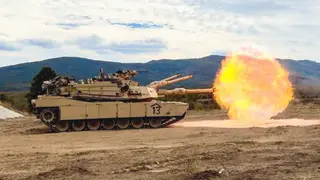
General Dynamics Land Systems has partnered with artificial intelligence startup Primordial Labs to integrate voice-control technology into combat vehicles including the M1 Abrams tank and experimental XM30 platform. The Anura voice-control system aims to reduce crew workload by enabling soldiers to manage complex tactical networks and target-recognition systems through spoken commands rather than manual controls. The collaboration addresses military requirements to operate advanced systems while reducing crew size and accommodating younger soldiers unfamiliar with traditional vehicle interfaces.
General Dynamics and Primordial Labs are targeting a significant operational challenge: military crews face mounting cognitive demands as combat vehicles gain autonomous and networked capabilities. The XM30 platform exemplifies this tension—it will reduce crew size from three soldiers to two while simultaneously introducing more sophisticated systems requiring management. The Anura system addresses this by functioning as a virtual crew member that handles communication tasks, sensor adjustments, and data reporting through voice commands rather than manual switches and keyboards, freeing soldiers to concentrate on tactical decisions.
The technology deliberately excludes weapon-firing functions, focusing instead on controllable, verifiable tasks. Unlike generative AI systems prone to unpredictable outputs, Anura operates through predetermined command structures that military planners can validate for safety and reliability before deployment.
The integration of voice-control AI into combat vehicles could reshape how militaries staff and train ground forces. By reducing crew workload and lowering barriers for younger soldiers unfamiliar with complex interfaces, the technology may enable smaller, more efficient vehicle crews without compromising operational capability. Conversely, dependence on AI systems introduces new vulnerabilities to jamming, spoofing, or malfunction in contested environments. The model may also influence workforce planning across defense establishments and reshape training requirements for future soldiers operating increasingly autonomous platforms.