Houthi Forces Launch Ballistic Missile Strike on Yemen's Main International Airport
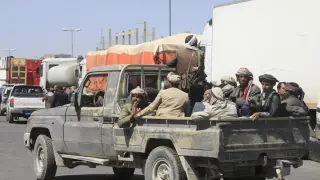
The Houthi militia attacked Aden International Airport with ballistic missiles and explosive drones on Wednesday, forcing authorities to divert an incoming flight and cancel boarding operations while aircraft and personnel were in immediate danger. The assault occurred as fighting between Iran-aligned Houthi forces and the legitimate Yemeni government intensified, with the militant group capturing additional coastal territory in recent weeks. Yemen's government and international observers condemned the attack as a violation of international humanitarian law and civil aviation protections.
The assault on Aden airport represents an escalation in the Houthi militia's campaign against civilian infrastructure in Yemen and neighboring Saudi Arabia. The group has demonstrated a pattern of targeting commercial aviation facilities and energy infrastructure across the region, with recent attacks also striking airports in Riyadh and Abha. These strikes underscore the militia's capability to conduct coordinated multi-front operations using both ballistic missiles and unmanned systems.
The broader conflict has created a humanitarian emergency of significant scale. Over 200,000 people have been newly displaced as fighting intensifies around strategically important shipping routes, while existing malnutrition and displacement have left three-quarters of Yemeni families food-insecure. The conflict's connection to US-Iran tensions has drawn in external military actors, including the Saudi-led coalition, perpetuating a cycle of violence across Yemen's fragmented territory.
The airport attack could further destabilize Yemen's already-fractured civil aviation and humanitarian logistics networks, potentially hampering aid delivery and commercial activity in government-controlled areas. Sustained targeting of civilian infrastructure may intensify regional tensions involving Saudi Arabia and complicate international diplomatic efforts. The displacement surge and humanitarian deterioration could strain neighboring countries and international relief organizations, while the strategic fighting around shipping lanes may have implications for global energy markets and maritime security in a critical waterway.