Scientists achieve breakthrough with first functioning thorium-based nuclear clocks
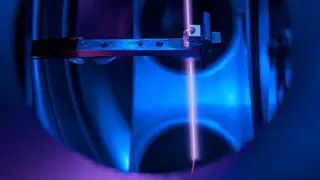
Research teams in Vienna and Beijing have successfully built working prototypes of nuclear clocks that measure time by tracking energy state changes in thorium nuclei rather than electron transitions in atoms. These devices could theoretically achieve precision levels of one second over billions of years, far exceeding the capabilities of current atomic clocks that drift by one second every 300 million years. The breakthrough could enable unprecedented measurements of phenomena like dark matter and other fundamental physics mysteries.
Thorium-229 holds special significance because it requires far less energy than other isotopes to induce nuclear transitions, making it uniquely suited for clock construction. Both research institutions developed their prototypes independently yet simultaneously, creating a competitive dynamic that may accelerate progress in the field. The Vienna team achieved a milestone by demonstrating self-stabilizing behavior comparable to conventional atomic clocks, while the Chinese prototype demonstrated superior stability metrics.
Current nuclear clock prototypes still lag behind established cesium atomic standards by roughly tenfold. However, researchers anticipate that technological refinements—particularly advances in laser efficiency and crystal quality—will enable successive generations of nuclear clocks to systematically close this gap and eventually achieve the theoretical precision advantages that make this technology worth pursuing.
Improved timekeeping precision could strengthen infrastructure sectors dependent on atomic clock accuracy, particularly GPS, telecommunications, and financial systems requiring precise synchronization. Scientific applications may benefit substantially, as enhanced measurement capabilities could facilitate detection of subtle physical phenomena and refine fundamental physics research. However, meaningful practical advantages remain years away, contingent on whether engineering challenges can be overcome. The development trajectory remains uncertain, and widespread adoption would require significant technological maturation before affecting everyday applications.