Jurassic fossil reveals semiaquatic mammal relative with platypus-like tail
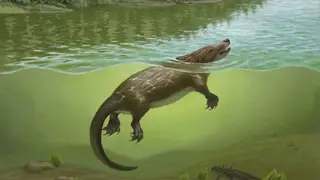
A newly described fossil from Inner Mongolia belongs to Megacauda sungei, a mammal relative that lived about 168 million to 163 million years ago. It weighed roughly 1 to 2 kilograms and had a broad, flattened tail plus other features suggesting it swam in freshwater habitats. The study appeared in Nature.
Megacauda sungei lived roughly 168–163 million years ago in what is now Inner Mongolia. At about 1–2 kg, it is described as the largest known Jurassic mammal relative, though still small. Its broad, flat tail suggests strong swimming, while short hind limbs and long feet may have aided swimming or burrowing in riverbanks.
The fossil, unearthed in 2016, preserves bones and soft tissue. Stomach-area remains and surrounding deposits point to a diet including salamanders, fish, and invertebrates. Its canines and shearing cheek teeth indicate predation, and throat structures resemble those modern mammals use for swallowing and suckling.
This discovery could draw public attention to Jurassic mammals and the diversity of ancient life, potentially enriching museum exhibits, classroom discussions, and science media. Paleontologists and anatomy researchers may use it to examine how swimming, burrowing, and feeding adaptations evolved among mammal relatives. General audiences might find the platypus-otter comparison engaging, though the fossil's scientific importance will depend on further study and expert scrutiny.