Tybee Island confronts rising seas and chronic beach erosion
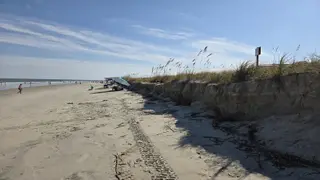
Tybee Island's beach is losing sand because development, sea walls, jetties, and shipping channels interfere with natural sand movement, while sea level rises about half an inch each year. The Army Corps of Engineers has repeatedly added sand, but more than half of the 1.3 million cubic yards placed in 2019 and 2020 has already disappeared. The erosion threatens dunes, sea turtle nests, local businesses, and the island's protection from storm surge.
Tybee Island, a Georgia barrier island near the Savannah River’s mouth, normally receives sand from islands to its north. Development, seawalls, jetties, and a shipping channel have blocked that movement. Since the 1970s, the Army Corps of Engineers has dredged sand and added it to East Coast beaches; Tybee’s renourishment cycle is seven years.
After 1.3 million cubic yards were placed in winter 2019–2020, over half washed away. Erosion has carved a five-foot dune cliff near the DeSoto Beach Hotel, damaged turtle nests, and hurt beach rental and hotel business. Sea level rises roughly half an inch annually.
The erosion could affect Tybee residents, visitors, local businesses, and wildlife, especially sea turtles, by reducing beach access and nesting habitat. Weakened dunes may leave the island and mainland more exposed to storm surge, while repeated sand replacement may raise questions about long-term costs and funding. The outcome may influence how other coastal communities plan for rising seas and shoreline loss.