Carriers Move Toward Quantum-Resistant Networks as Migration Work Begins
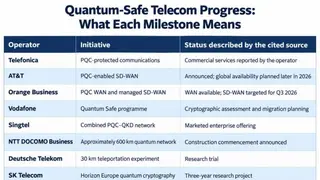
Telefonica, AT&T, and Orange are rolling out quantum-resistant business connectivity, while Vodafone and other carriers are at different stages of migration and testing. The article separates post-quantum cryptography, quantum key distribution, and quantum teleportation, stressing that announcements about them should not be conflated. It also notes that NIST finalized its first PQC standards in August 2024 and that telecom operators must locate weak cryptography and plan upgrades because future quantum computers could eventually expose long-lived encrypted data.
Telefonica, AT&T and Orange are bringing business connectivity designed to resist quantum attacks toward commercial availability, while Vodafone remains at a different stage with migration efforts and quantum-network trials. NIST’s first three post-quantum standards appeared in August 2024, giving operators a basis for implementation and procurement planning.
The article separates three technologies: PQC uses algorithms on ordinary systems; QKD distributes keys via quantum channels; teleportation moves quantum states and underpins future networks. Telefonica’s MWC 2026 claim about commercial PQC-protected services was its own, covering data-center interconnection and corporate links, not proof that every system is quantum-safe.
The shift may affect businesses, cloud providers and telecom customers handling long-lived sensitive data, since earlier protection could reduce exposure to future decryption. It could also widen gaps between operators with mature migration plans and those still testing, potentially complicating cross-network security and procurement. For ordinary users, benefits may arrive indirectly through stronger infrastructure, though costs and service differences could vary by provider and region.