AfD Takes German State Parliament Chair, Revealing Possible CDU Support
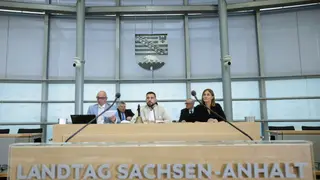
Tobias Rausch of the Alternative for Germany was elected president of the Saxony-Anhalt state parliament, becoming the first far-right politician to lead a German legislature since 1945. He received 48 of 82 valid votes, four more than the AfD and BSW could provide together, indicating support from members of other parties in the secret ballot. Rausch said CDU members had agreed to back the AfD's Ulrich Siegmund as minister-president in December, despite the CDU's official refusal to cooperate with the AfD.
Tobias Rausch, 35, is the AfD's state general secretary and now presides over the Saxony-Anhalt Landtag, the first far-right figure to hold such a post in Germany since 1945. He won 48 of 82 valid votes, with 29 opposed and five abstentions; the AfD's 39 seats plus the BSW's five fall four short of that tally.
The September 6 election gave the AfD 43.8 percent and 39 of 83 seats, while the CDU fell to 17.2 percent after governing the state since 2002. Rausch also intends to remain party general secretary, an unusual combination for a role expected to be neutral.
The precedent could reshape how German state legislatures function, since a presiding officer who keeps a party post may blur procedural neutrality. Voters in Saxony-Anhalt, particularly those who backed parties refusing cooperation with the AfD, may feel their choices were undercut by secret ballots. If CDU lawmakers did assist, the firewall's durability could be questioned nationally, potentially affecting coalition calculations and public trust in party pledges elsewhere.