CRS-35 Dragon mission set to carry science and supplies to the space station
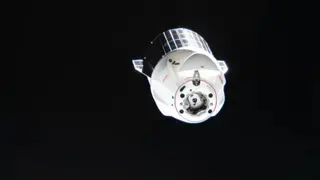
NASA and SpaceX are targeting October 13, 2026, for the CRS-35 Dragon cargo launch to the International Space Station from Cape Canaveral. The uncrewed spacecraft will carry science experiments, supplies, equipment, and new solar arrays, then dock autonomously at the Harmony module about two days later. A backup launch opportunity is set for October 14, with NASA and SpaceX providing live coverage.
The CRS-35 flight is scheduled to lift off from Cape Canaveral Space Force Station in Florida no earlier than 6:33 a.m. EDT on Oct. 13, 2026, with a second chance at 6:08 a.m. EDT the following day. The uncrewed Dragon will spend roughly two days catching up to the station before docking automatically at Harmony’s space-facing port.
Its payload includes the last pair of ISS Roll-Out Solar Arrays, intended to strengthen the station’s power for operations through its planned 2030 deorbit. Other experiments include LambdaVision-1, which will examine artificial retina production in microgravity, and Stellar Spheroids, which will study how microgravity affects three-dimensional models of human heart tissue.
Advances in orbital power and microgravity biomedical research could eventually influence patients, drug developers, and future crews. Reliable resupply may help sustain ISS research and international partnerships, while autonomous cargo operations may inform commercial spaceflight. The public may see benefits through science and technology spinoffs, though near-term effects are likely indirect and gradual.