Hera set for long braking burn before asteroid rendezvous
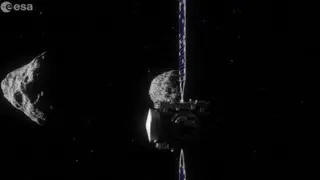
ESA's Hera spacecraft is preparing for a 93-minute thruster burn on October 15 to slow down near the Didymos asteroid system. The maneuver will help it match the system's velocity so it can study Didymos and Dimorphos, the moonlet struck by NASA's DART. Mission controllers must also refine estimates of the asteroids' orbits, rotation, and masses.
Hera will fire its orbit-control thrusters for 93 minutes on October 15, aiming to shed speed so it can travel alongside the Didymos pair rather than race past. A second, shorter burn about a week later will refine the resulting path.
As the probe closes in, controllers must simultaneously solve for the asteroids' solar-system path, Dimorphos's path around Didymos, their spin states, and their masses. Radio links and camera images will supply the data. Dimorphos may still be tumbling or surrounded by debris from DART's 2022 strike, making the approach harder.
The Hera rendezvous could sharpen humanity's understanding of asteroid deflection, a capability that may matter if a hazardous object is ever discovered. Scientists and engineers would gain data for future planetary-defense missions, while space agencies and the public may see the DART experiment's aftermath more clearly. Its impact on daily life is likely indirect, but it could inform long-term risk planning and international cooperation.