Why Humanoid Robots Remain Far From Everyday Reality
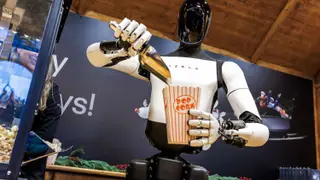
Many researchers are skeptical that current AI techniques will soon produce general-purpose humanoid robots, despite enthusiastic predictions from Elon Musk and others. The article contrasts Tesla's Optimus demonstrations with the challenges of navigating an unpredictable physical world, and it describes disagreements over whether existing AI methods are enough. It also warns that treating humanoids as generalist machines can create misleading expectations.
Tesla's Optimus has appeared in videos dancing, passing popcorn, binning trash, vacuuming, and pressing a microwave button. It has also fallen while handing out water and struggled to iron. Elon Musk says it could become Tesla's biggest product, work in factories and homes, gain dexterity beyond human levels, cost about $20,000, and sell publicly by late 2027.
Others are equally bullish: Marc Andreessen called robotics potentially the planet's largest industry; Nvidia's Jensen Huang said humanoids would match human ability this year; Morgan Stanley projected nearly one billion human-like robots by 2050 and a $5 trillion market. Yet Yann LeCun and Jonathan Hurst doubt current AI can make them useful or physically human-like.
If humanoid robots remain distant, workers and consumers may see fewer near