Motor-Free Speaker Array Mimics Rotary Audio Effect
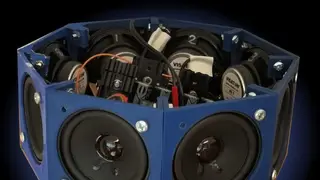
Engineers at the University of Nottingham created a circular array of speakers that shifts audio electronically around the array, giving listeners the impression of a moving sound source. The solid-state design reproduces aspects of a Leslie rotary speaker without motors, belts, or other moving parts. The work, published in the Journal of the Audio Engineering Society, modulates sound waves in the space around the listener rather than only changing an electronic signal.
Engineers in the University of Nottingham’s Faculty of Engineering built a circular loudspeaker array. Instead of spinning a horn, it electronically shifts audio among stationary speakers, creating the impression of a moving source. The researchers call it a solid-state rotary speaker.
The concept draws on the Leslie speaker, developed in the 1930s for electric organs, which used motors and belts to rotate horns and baffles. Electronic and digital effects like phasers and chorus can imitate parts of that sound, but they modify signals rather than moving sound through physical space. The Nottingham work was published in the Journal of the Audio Engineering Society.
This development may interest musicians, audio engineers, and music producers seeking rotary-style effects without mechanical upkeep. If the approach proves practical and affordable, it could broaden access to spatial sound tools and inspire new performance or recording techniques. Listeners might encounter more immersive effects in live venues or home systems. However, adoption will depend on cost, scalability, and whether the effect is musically convincing.