Israeli Fossil Helps Reconstruct Ancient Landscape Used by Early Humans
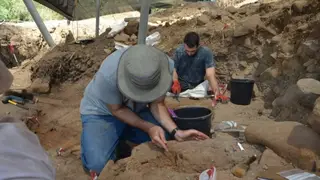
A well-preserved elephant tooth from northern Israel has helped researchers reconstruct the environment inhabited by early humans roughly 700,000 years ago. The specimen comes from Gesher Benot Ya'aqov, a prehistoric site in the Jordan Rift Valley south of the modern Hula Valley. Stone tools show that early humans occupied the area.
The fossil at the center of the study is a well-preserved elephant tooth from northern Israel. It was recovered at Gesher Benot Ya'aqov, a prehistoric site in the Jordan Rift Valley, south of today's Hula Valley.
Researchers used the specimen to help reconstruct the landscape that early humans inhabited roughly 700,000 years ago. Stone tools found in the area show that those early humans occupied the site.
This discovery may deepen public understanding of how early humans related to ancient landscapes, and could inform museum displays, education, and future research. Archaeologists, science communicators, and audiences interested in human origins are most likely affected. It may also encourage greater attention to preserving prehistoric sites and fossils, though its broader social impact would depend on how researchers and media interpret the find.