Jabil sees humanoid manufacturing shifting beyond hand-built prototypes
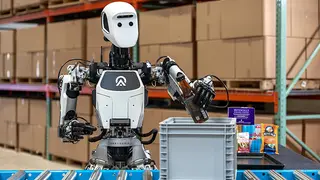
Jabil says humanoid robot production is moving from low-volume, hand-assembled units toward runs in the tens of thousands. The manufacturing services provider, which has worked with Apptronik on its Apollo robot, argues that cost structure, manufacturability, and quality become critical at that scale. Jabil also notes that edge compute is improving but remains a cost concern for robotics customers.
Jabil, based in St. Petersburg, Florida, has collaborated with Apptronik on the Apollo humanoid. Thomas Brown, a senior director at Jabil, described a shift from small, manually assembled robot batches toward production volumes reaching tens of thousands, where cost, manufacturability, and quality become central.
Brown also noted that edge computing, including NVIDIA’s Jetson line, is increasingly capable but still costly at scale. He pointed to automotive-inspired wiring harnesses that combine ruggedness with compact consumer-electronics-like packaging, and said supply chains are being diversified.
As humanoid production scales, factory and warehouse workers, robot developers, and manufacturers could see changed task mixes and new supply-chain demands. Lower unit costs may broaden deployment, while compute expenses and design complexity may slow adoption. Consumers might encounter more capable physical AI, but benefits and disruptions may vary by sector and region.