Los Angeles Explores Canopies and Shelters to Expand Shade
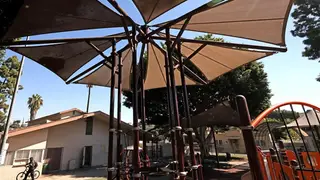
With only 24 percent of Los Angeles shaded at midday, officials are considering built shade such as canopies, awnings, and bus shelters to supplement tree planting. A UCLA-USC collaboration called ShadeLA tested temporary shade sails during a 103-degree day, and advocates say such structures can be installed quickly where trees are not practical. Budget cuts to the city's urban forestry division and worsening heat waves have increased interest in immediate shade solutions.
Los Angeles shades only about a quarter of its area at midday, counting trees and built structures, and less in poorer, mostly nonwhite neighborhoods. Trees remain preferred because they cool air as well as block sun, but they need space and years to mature, and forestry funding has shrunk.
Built options — cloth sails, awnings, bus shelters — sharply lower surface temperatures by blocking sunlight, though they release no water vapor. ShadeLA, a UCLA-USC partnership, strung sails between streetlights at Exposition Park on a 103-degree game day; organizers called it bearable. Permitting remains fragmented across agencies, with no standard playbook like tree planting.
Expanded shade could matter most to residents of low-income neighborhoods, where midday cover is thinnest and heat exposure highest. Quick-installed canopies and shelters may bring relief to pedestrians, transit riders, and outdoor workers sooner than saplings can mature. If the city adopts a clearer permitting path, built shade might become routine alongside planting; if not, pilot projects may remain scattered. Officials weighing cost, maintenance, and aesthetics may shape how widely such structures appear, and how fairly the benefits are distributed.